2026-08-24 ·
What to Do After Heavy Rains Flood Basements Near the Christina River
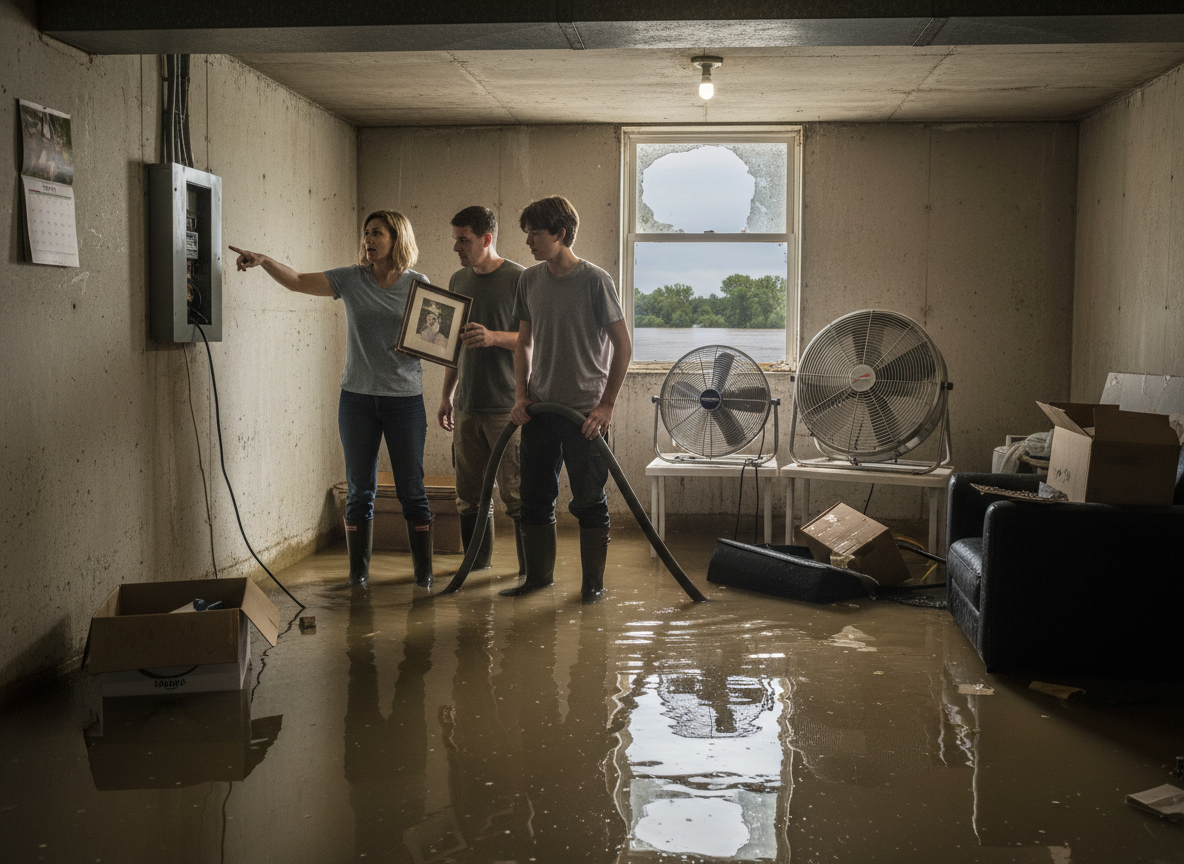
After heavy rains flood basements near the Christina River, shut off electricity at the main panel if water reaches outlets or appliances, avoid all contact with the water, and arrange professional water extraction within the first 24 hours to limit structural harm in older New Castle County homes.
Safety First in Flooded Basements
Wilmington's humid subtropical pattern brings sudden downpours that raise the Christina River level quickly, especially where it meets the Delaware Riverfront near Southbridge and Browntown. Older row homes in these neighborhoods often sit on shallow foundations with limited grading, so water enters through foundation cracks or window wells within minutes of sustained rain. Turn off power at the breaker before entering any standing water, and never use household fans or extension cords in wet conditions. Check for sewage mixing if the flood reaches street level, since combined systems in Downtown Wilmington and the East Side can back up during peak events. Wear rubber boots and gloves when moving through affected spaces, and keep children and pets away until the area is cleared. If the home sits near Brandywine Park or Trolley Square, note that steep slopes can channel additional runoff into lower levels during the same storm.
Assessing Water Depth and Structural Impact
Measure the water depth in inches and note how far it traveled up finished walls or reached electrical outlets. In pre-1950 homes common along the West Side and Forty Acres, plaster and lathe walls absorb moisture rapidly, while joists in basements near Highland can begin to soften after 48 hours of saturation. Document every affected item with photos before moving anything, and separate wet contents from dry areas to prevent cross-contamination. Homes in neighborhoods bordering the Christina River often have dirt floors or partial slabs that hold hidden moisture pockets. Compare the current water line against past storm marks on the foundation to judge whether this event exceeds normal seasonal flooding. Record the time the water first appeared so extraction timing can be tracked accurately.
Water Extraction and Initial Drying
Remove standing water as soon as safety allows, then begin air movement and dehumidification to bring moisture levels below 60 percent relative humidity. Water extraction crews use truck-mounted pumps that handle several hundred gallons per hour, which matters in river-adjacent blocks where basements can hold thousands of gallons after a single event. Follow extraction with structural drying that targets both air and materials, because Wilmington summers keep ambient humidity high and slow natural evaporation. Place moisture meters on joists, subfloors, and lower drywall to confirm readings drop steadily over the next three to five days. In Claymont or Newark homes with similar river proximity, crews often run equipment longer because clay-heavy soils retain water longer than sandy areas farther inland.
Mold Prevention After River Flooding
Mold colonies can begin forming on wet drywall and insulation within 24 to 48 hours in the region's warm, moist summers. Mold remediation becomes necessary once visible growth appears or musty odors develop in finished basements. Remove and discard porous materials that stayed wet for more than 48 hours, then treat remaining surfaces with antimicrobial solutions before new insulation or drywall is installed. Homeowners in Trolley Square and Forty Acres often discover hidden growth behind baseboards weeks later if drying was incomplete. Monitor humidity daily with a meter placed at floor level, and run dehumidifiers until readings stay under 55 percent for several consecutive days. Seasonal cold snaps in winter can mask ongoing moisture until spring warming restarts growth.
Long-Term Steps for Christina River Properties
Improve grading around the foundation so water flows away from the house toward the street, and install French drains or sump pumps with battery backup in homes near the river. Review the linked article on typical costs for removing standing water in Wilmington Delaware to understand what extraction and drying typically involve after repeated events. Check gutters and downspouts twice a year, especially before fall and spring rains, and extend downspouts at least six feet from the foundation in Southbridge and East Side lots. For homes built before 1950, the article How Wilmington Winters Affect Pipes in Pre-1950 Homes explains how freeze-thaw cycles can create new entry points that worsen summer flooding. Schedule annual inspections of the Christina River flood plain maps to see whether elevation changes have increased risk for your block.