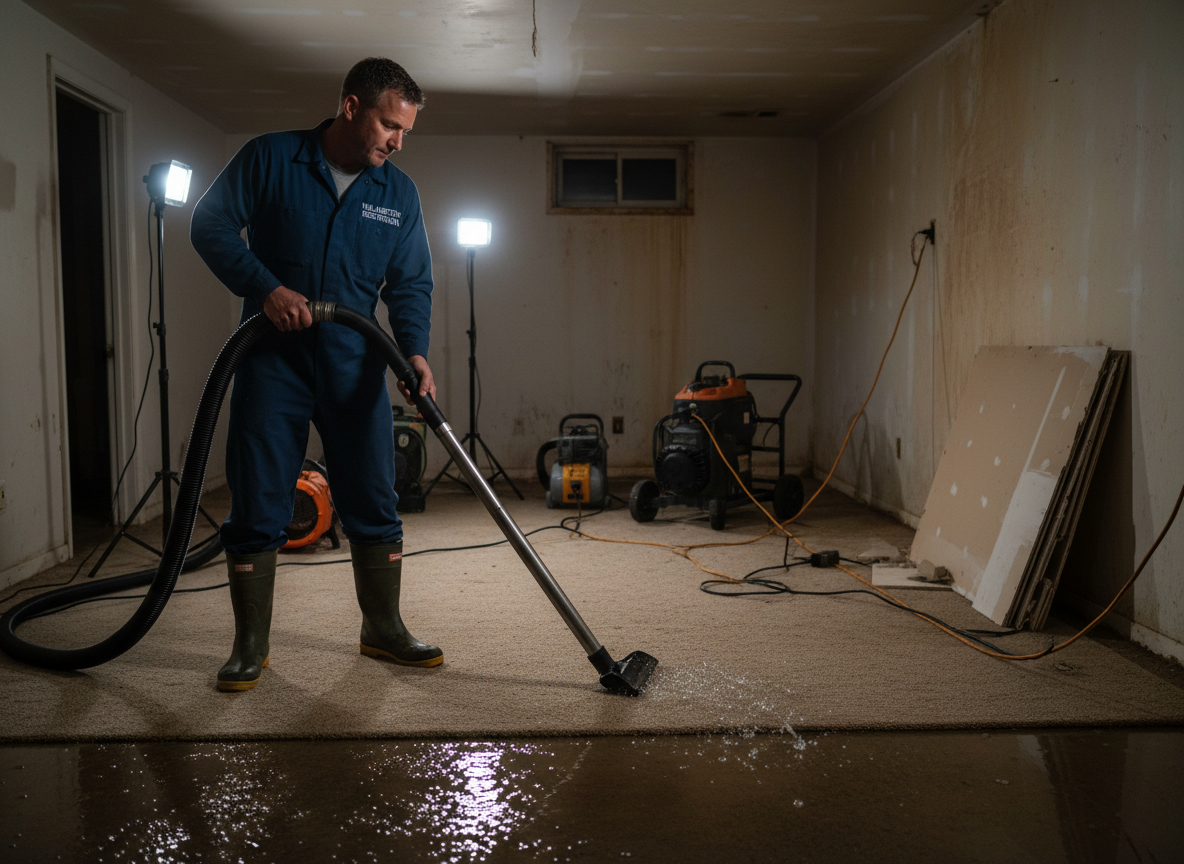
Effective water extraction begins with locating and stopping the source, whether a burst pipe, roof leak, or groundwater entry common in Wilmington's older neighborhoods. Once isolated, technicians map moisture with meters and thermal imaging to determine how far water has traveled behind walls or under floors. Extraction equipment then pulls standing water from carpets, hardwood, and concrete slabs before humidity levels rise and create mold conditions.
After bulk removal, commercial air movers and dehumidifiers are positioned according to the building's construction and the season's humidity. Daily moisture readings guide adjustments so hidden cavities reach dry standards without unnecessary demolition. When materials cannot be saved, decisions on cutouts or replacements are made with the homeowner present so repair scope stays clear.
Common Triggers for Professional Extraction
Wilmington's mix of pre-1950 brick row homes and slab-on-grade builds means water often travels along mortar joints or under tile before it shows on the surface. Coastal humidity and occasional nor'easters keep ambient moisture high, so extraction without ongoing dehumidification rarely finishes the job.
Technician insight
In Wilmington the thing that catches most people out with Water Extraction is the high water table combined with 80-plus-year-old brick foundations that wick moisture upward long after the visible water is gone. Homeowners often place box fans in windows, but without sealed dehumidification the river humidity just keeps feeding the problem.
Groundwater Entry After Heavy Rain
A 1920s row home near the Brandywine experienced seepage through the rear foundation wall after three inches of rain. Extraction equipment removed six inches of standing water from the finished basement; daily readings showed joists and plaster still holding moisture behind the baseboards. Directed drying and two small access cuts allowed the structure to reach dry standards without full wall demo.
Water Extraction Services We Offer
✓Standing Water Removal
Rapid pumping of pooled water from basements and crawl spaces prevents further saturation of joists and subfloors common in Wilmington's older stock.
✓Carpet and Pad Extraction
Specialized wands lift water from carpet fibers and padding before mold sets in, often allowing reuse when performed within the first 24 hours.
✓Subfloor Moisture Extraction
Drilling or lifting access points lets technicians reach trapped water between layers without full floor replacement in many Delaware homes.
✓Wall Cavity Drying
Baseboard removal and directed airflow dry insulation and studs before hidden moisture leads to larger restoration needs.
✓Dehumidification Setup
High-capacity units sized for the space pull excess moisture from the air after extraction, calibrated for Wilmington's river-influenced humidity.
Water Extraction Cost in Delaware
| Service | Typical Range | What Affects It |
|---|---|---|
| Small Area Extraction (under 200 sq ft) | $350–$750 | Single room or hallway with accessible water |
| Basement Water Removal | $800–$2,200 | Depth, square footage, and whether sump pump is present |
| Wall Cavity and Subfloor Work | $600–$1,800 | Requires baseboard removal or small access points |
| Dehumidifier and Air Mover Rental | $150–$400 per day | Equipment only; monitoring billed separately |
Ranges are typical for Delaware and confirmed with an exact written quote before any work starts.
How it works
- 1
Source Control
Identify and stop the water entry point using shutoffs or temporary barriers before extraction begins.
- 2
Safety and Assessment
Check for electrical hazards, then use moisture meters and thermal cameras to chart affected areas.
- 3
Extraction
Deploy pumps, wands, and vacuums to remove standing and trapped water from all accessible surfaces.
- 4
Drying and Monitoring
Place air movers and dehumidifiers, then return daily to record readings until materials meet dry standards.
- 5
Repair Scope Decision
Review which materials require replacement versus drying so the homeowner can plan next steps with contractors.
Pricing
Pricing varies by volume of water, square footage affected, and whether hidden cavities require access cuts.