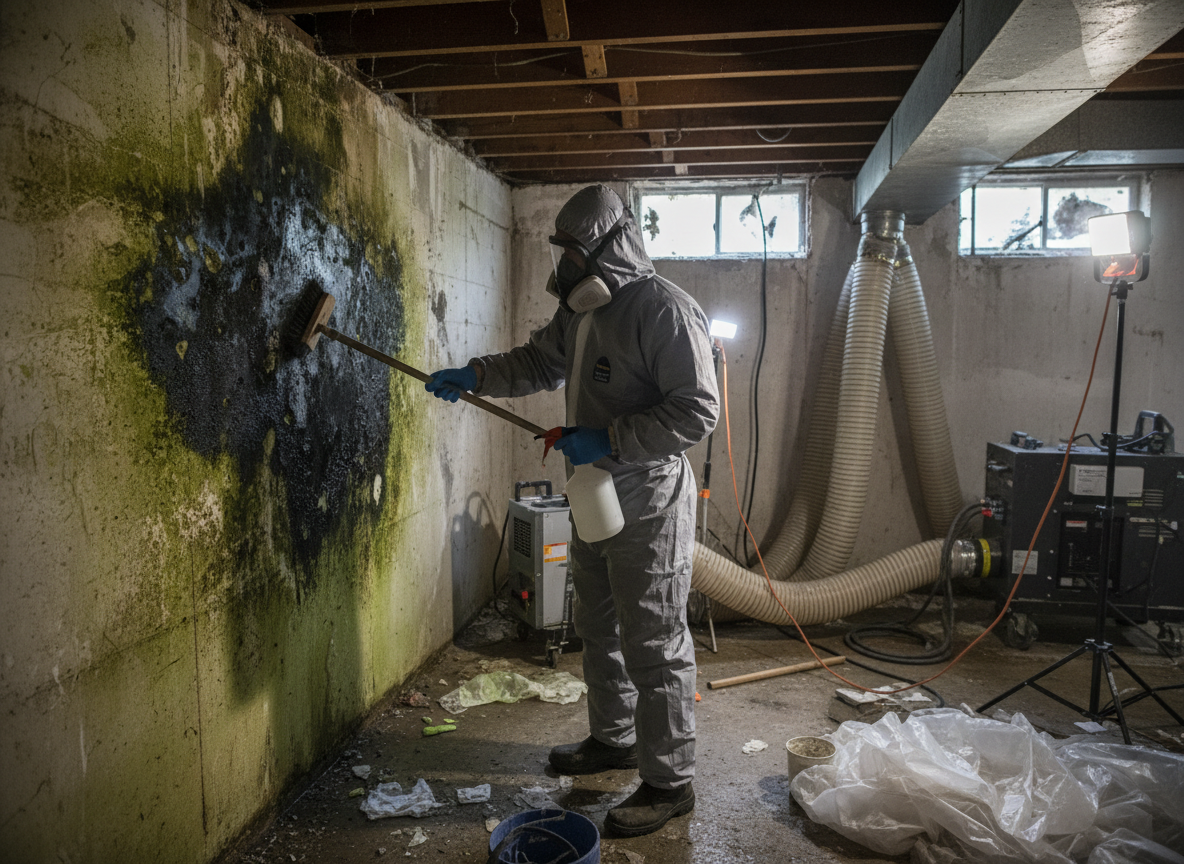
Mold remediation begins with locating the moisture source that allowed growth, often tied to prior water damage from leaks or flooding common in Delaware's older housing stock. Technicians assess humidity levels and hidden moisture in walls, floors, and attics using meters before any removal starts.
Safety protocols include containment barriers and negative air pressure to keep spores from spreading during cleanup. Extraction of affected porous materials is followed by HEPA vacuuming and antimicrobial treatment on salvageable surfaces.
Structural drying and dehumidification follow removal to bring moisture content below 15 percent, a critical step in Wilmington's humid summers where ambient humidity can restart growth. Monitoring continues daily until readings stabilize.
Connecting Mold Issues to Water Damage Restoration
Many mold jobs start from incomplete water damage cleanup where standing water or damp cavities were not fully addressed. Proper restoration after leaks or storms reduces the chance of secondary mold problems that require separate remediation later.
Technician insight
In Wilmington the thing that catches most people out with mold remediation is older row-home construction where shared walls and limited crawlspace access let moisture travel between units; skipping a full moisture map often means the job has to be reopened weeks later when growth reappears from the neighbor side.
Hidden Growth After Basement Leak
A homeowner in Wilmington noticed musty odors weeks after a sump pump failure. Inspection found elevated moisture in shared foundation walls and behind finished basement paneling. Containment was built, wet drywall and insulation were removed, and drying equipment ran for five days until readings dropped. Clearance testing confirmed safe levels and the owner was advised on vapor barrier upgrades before new finishes went in.
Mold Remediation Services We Offer
✓Moisture Source Identification
Pinpoints active leaks or humidity issues behind walls and under floors so remediation targets the root cause instead of repeated growth.
✓Containment and Air Filtration
Sets up sealed barriers and HEPA air scrubbers to prevent mold spores from migrating to unaffected areas during removal.
✓Porous Material Removal
Safely extracts and disposes of drywall, insulation, and carpet that cannot be salvaged, limiting spread and future health risks.
✓Structural Drying and Dehumidification
Uses commercial air movers and dehumidifiers to pull remaining moisture from framing and subfloors after initial water damage events.
✓Post Remediation Clearance Testing
Verifies spore levels have returned to normal through air sampling before any reconstruction begins.
✓Minor Repair and Reconstruction Guidance
Advises on replacing removed materials with mold-resistant options once drying is confirmed complete.
Mold Remediation Cost in Delaware
| Service | Typical Range | What Affects It |
|---|---|---|
| Initial Assessment And Moisture Mapping | $150–$350 | Larger homes or multiple affected rooms increase the range |
| Containment And Equipment Setup | $200–$500 | Includes barriers and air scrubbers for the work zone |
| Material Removal And Disposal | $300–$900 | Varies with volume of drywall, insulation, or flooring removed |
| Drying And Dehumidification | $250–$700 | Based on number of days equipment runs in humid Wilmington conditions |
| Clearance Testing | $150–$300 | Air sampling after work is complete |
Ranges are typical for Delaware and confirmed with an exact written quote before any work starts.
How it works
- 1
Assessment And Moisture Mapping
Inspect the property, measure moisture in building materials, and identify the water source that triggered growth.
- 2
Containment Setup
Isolate the affected zone with plastic sheeting and negative air machines to protect the rest of the home.
- 3
Removal And Cleaning
Remove unsalvageable materials, HEPA clean surfaces, and treat remaining structure.
- 4
Drying And Monitoring
Run drying equipment and check moisture daily until levels are safe for repair.
- 5
Final Verification
Perform clearance testing and provide guidance on preventing future issues.
Pricing
Costs depend on square footage affected, depth of hidden growth, and whether prior water damage restoration is also needed.