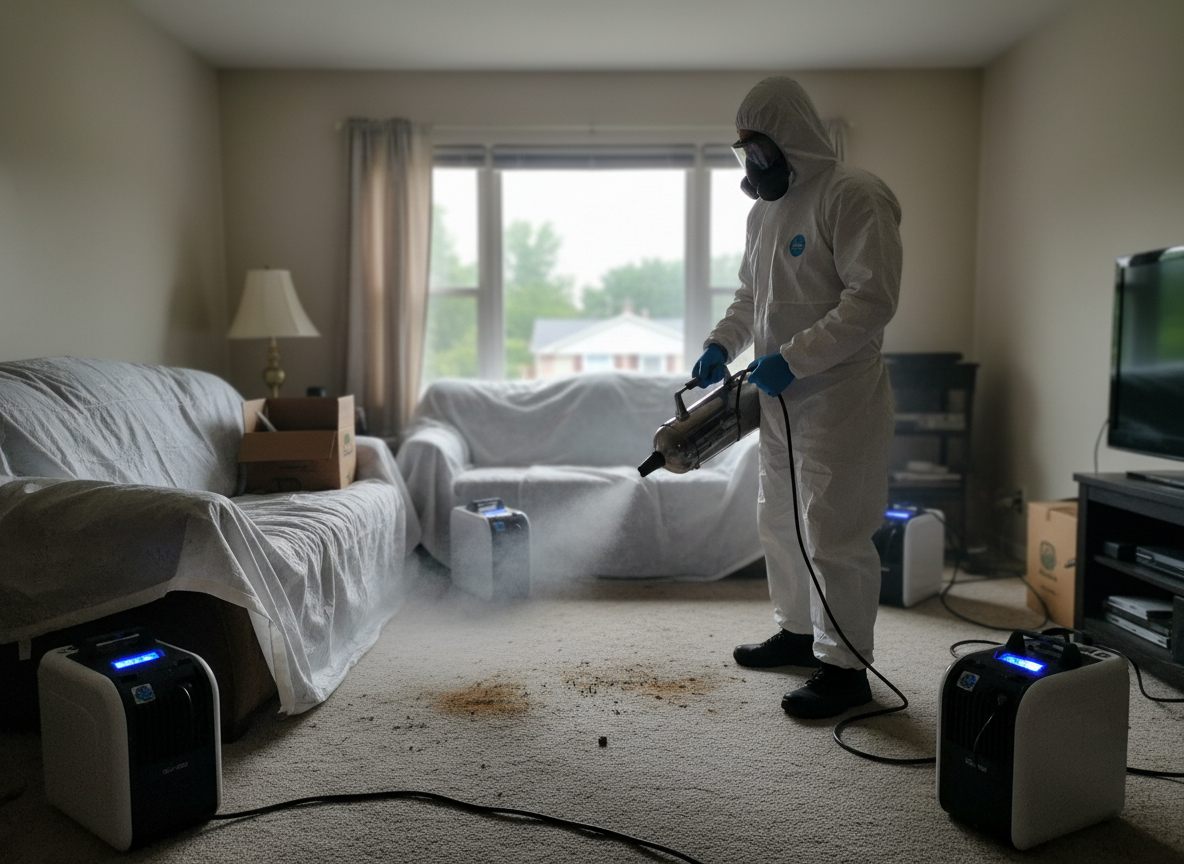
Water damage restoration in Wilmington often leaves behind odors that standard cleaning misses. Effective odor removal starts with locating the moisture source, assessing affected materials, and removing standing water before any deodorizing steps begin.
Homeowners searching for water damage cleanup frequently discover that smells return if hidden moisture in subfloors or wall cavities is not fully extracted and dried. Our process combines dehumidification with targeted cleaning to break the cycle of recurring odors.
Common Causes of Lingering Odors After Water Events
In older Wilmington row homes, water from roof leaks or basement seepage soaks into plaster and hardwood, creating conditions for mold and bacterial growth that produce musty smells. Seasonal humidity along the Delaware River slows natural drying, making professional extraction and monitoring essential.
Technician insight
In Wilmington, the thing that catches most people out with Odor Removal is how brick row homes from the early 1900s trap moisture between shared walls; homeowners often clean visible surfaces only to have the smell return when humidity spikes from the river.
Musty Odor After Basement Seepage
A homeowner noticed a persistent smell weeks after minor flooding in a South Wilmington basement. We found elevated moisture in the subfloor and behind baseboards from slow seepage through aged mortar. Extraction, targeted drying, and neutralization cleared the odor without full floor replacement.
Odor Removal Services We Offer
✓Sewage Odor Extraction
Removes contaminated water and neutralizes waste-related smells through source isolation, extraction, and antimicrobial cleaning in affected areas.
✓Mold Odor Treatment
Targets hidden mold colonies behind walls or under flooring with moisture assessment, drying, and odor-neutralizing agents after water intrusion.
✓Basement Musty Odor Control
Addresses damp crawl spaces and cellars common in Wilmington by combining dehumidification, air scrubbing, and surface cleaning to stop musty smells.
✓Carpet and Pad Odor Removal
Extracts trapped water from flooring materials, followed by drying and cleaning to prevent bacterial odors from developing in Wilmington homes.
✓Drywall and Insulation Odor Neutralization
Locates water-damaged sections, removes saturated materials when needed, and applies treatments to eliminate smells embedded in porous surfaces.
Odor Removal Cost in Delaware
| Service | Typical Range | What Affects It |
|---|---|---|
| Initial Odor Assessment | Free | Includes moisture readings in accessible areas |
| Small Room Odor Removal | $350–$650 | Single affected space under 200 sq ft with no demolition |
| Basement Odor Treatment | $600–$1,200 | Includes drying equipment for typical Wilmington row-home cellars |
| Wall Cavity Odor Neutralization | $450–$900 | Requires access cuts and material replacement decisions |
Ranges are typical for Delaware and confirmed with an exact written quote before any work starts.
How it works
- 1
Source Control and Safety
Identify and stop the water source while securing the area to prevent exposure to contaminants during water damage restoration.
- 2
Moisture Assessment and Extraction
Use meters to map hidden moisture, then remove standing water and saturated debris to support effective water damage cleanup.
- 3
Structural Drying and Dehumidification
Deploy drying equipment and dehumidifiers sized for Wilmington conditions to bring materials to acceptable moisture levels.
- 4
Cleaning and Odor Neutralization
Apply cleaning agents and odor counteractants to affected surfaces, then monitor readings until smells are eliminated.
Pricing
Costs vary with square footage, depth of moisture penetration, and whether materials must be removed.