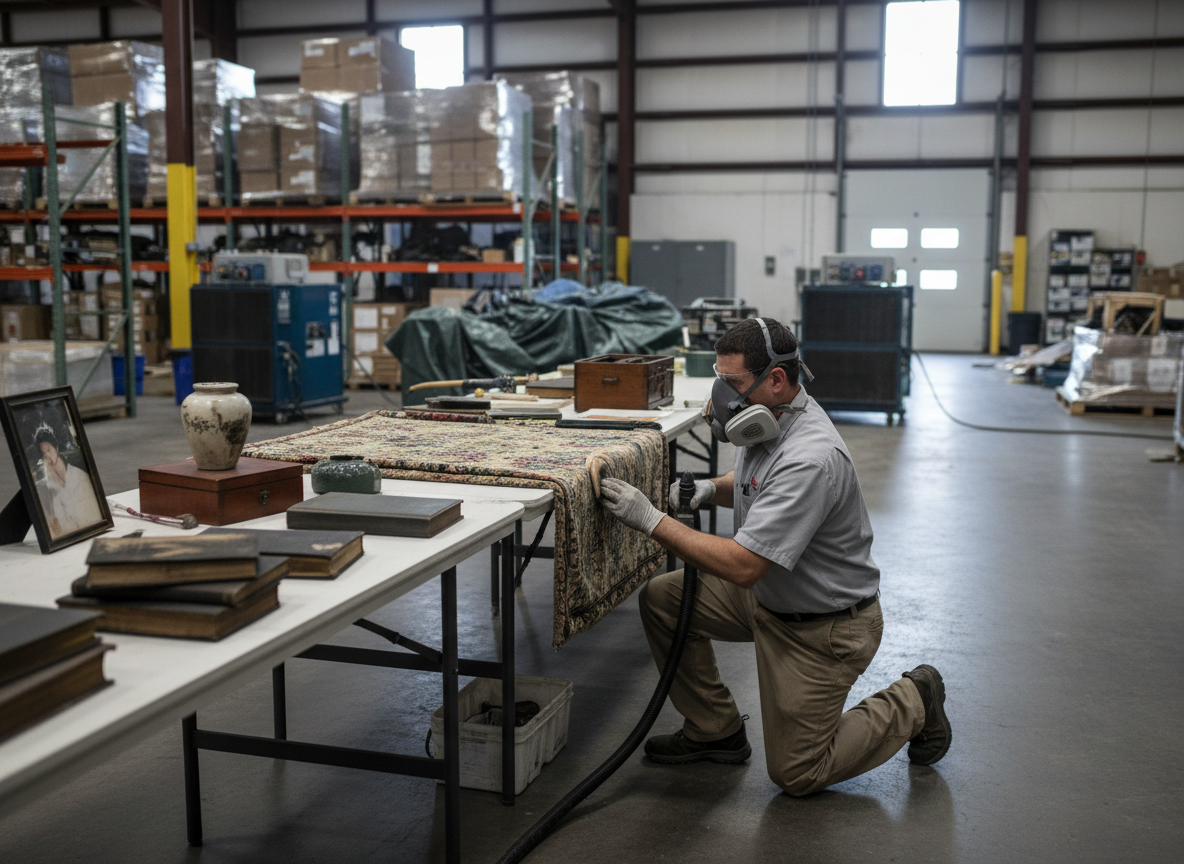
After water intrusion, contents require the same disciplined approach as the structure itself. Source control stops ongoing moisture entry, then safety protocols address electrical hazards and possible contaminants before any handling begins. Technicians perform moisture assessment on every item using meters and thermal imaging to determine what can be salvaged versus what must be discarded.
Extraction removes free water from saturated materials, followed by structural drying and dehumidification tailored to porous items such as books, upholstery and electronics. Continuous monitoring tracks humidity levels and material moisture content so adjustments can be made before mold sets in. Cleaning and sanitization steps follow once items are dry, with final decisions on repair or replacement made only after full documentation.
Common Content Items Restored
Paper documents and photographs respond well to freeze-drying when addressed within the first 48 hours. Electronics often require component-level disassembly and corrosion treatment. Textiles, including clothing and area rugs, undergo gentle agitation and controlled drying to prevent shrinkage and dye bleed.
Technician insight
In Wilmington's older brick row homes near the river, high ambient humidity keeps contents wet longer than homeowners expect, so we often have to pull baseboards and open wall cavities just to get air moving around furniture and boxes that look dry on the surface.
Water-damaged family photos in a South Wilmington basement
A finished basement took on several inches of water after a sump pump failure. We found photo albums and yearbooks still sitting in boxes on the floor. The albums were frozen on-site within hours, then transported for vacuum freeze-drying. Most prints were recovered without ink bleed or sticking; a few severely damaged pages were digitally scanned before disposal.
Content Restoration Services We Offer
✓Document and Paper Drying
Freeze-drying and flattening recovers bound books, tax records and photos before ink runs or pages stick permanently.
✓Electronics and Appliance Restoration
Component cleaning and corrosion removal salvages computers, stereos and kitchen appliances that would otherwise be totaled.
✓Textile and Upholstery Cleaning
Gentle extraction and drying restores curtains, area rugs and furniture fabrics while preventing mold growth in Wilmington's humid climate.
✓Artwork and Photograph Recovery
Specialized techniques stabilize paintings, prints and family photos so they can be returned without further delamination or color shift.
✓Hardwood Furniture Drying
Slow, controlled drying and refinishing prevents warping and cracking in solid wood pieces exposed to standing water.
Content Restoration Cost in Delaware
| Service | Typical Range | What Affects It |
|---|---|---|
| Document recovery (small box) | $150–$350 | Volume and whether freeze-drying is required |
| Electronics cleaning (per device) | $75–$250 | Complexity and corrosion level |
| Area rug cleaning and drying | $200–$600 | Size and fiber type |
| Upholstered chair restoration | $300–$700 | Fabric condition and cushion saturation |
Ranges are typical for Delaware and confirmed with an exact written quote before any work starts.
How it works
- 1
Initial Assessment
Technicians inventory every item, test moisture levels and note visible damage before moving anything.
- 2
Moisture Extraction and Stabilization
Free water is removed and items are packed for transport or treated on-site to halt further absorption.
- 3
Controlled Drying and Dehumidification
Chambers or portable equipment bring contents to safe moisture content while monitoring prevents over-drying.
- 4
Cleaning, Sanitizing and Final Inspection
Items receive appropriate cleaning; those that pass inspection are returned or prepared for minor repairs.
Pricing
Pricing depends on item type, quantity, and how long materials have been wet.