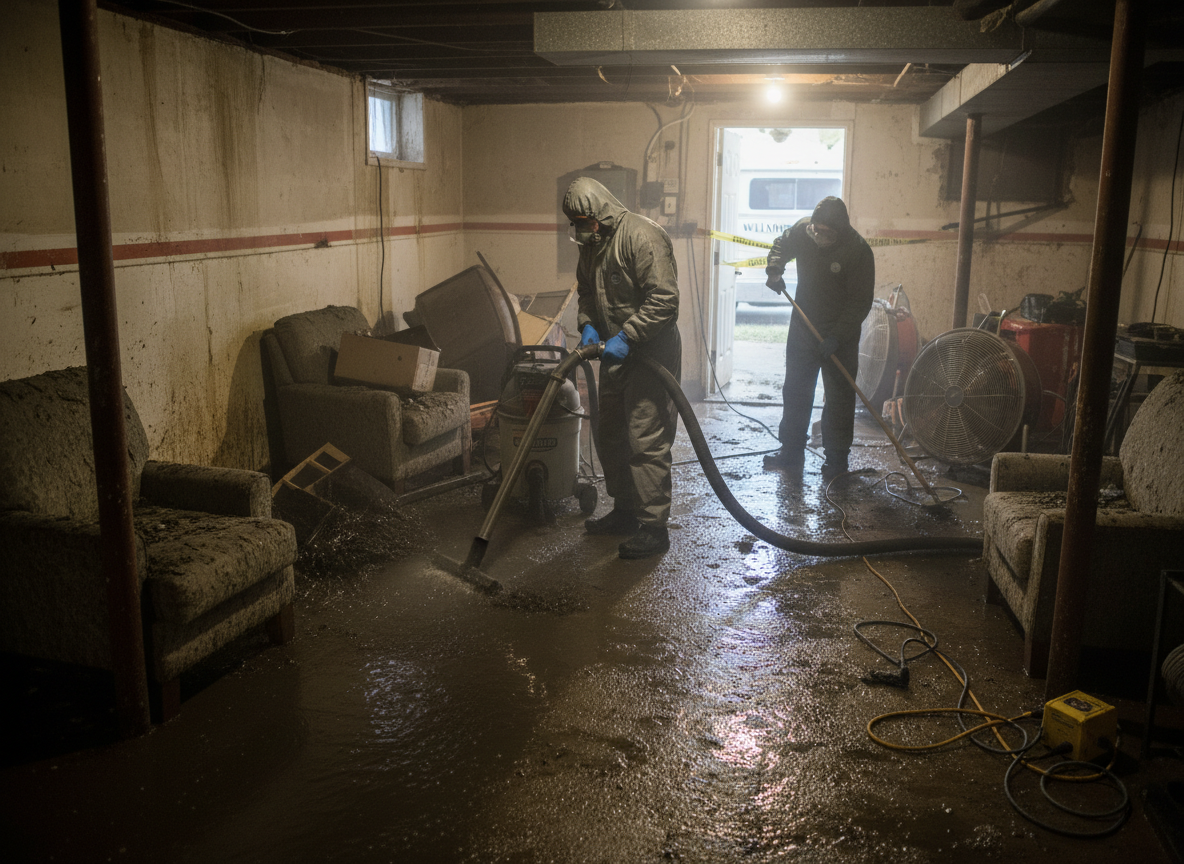
Sewage cleanup requires immediate source control followed by thorough moisture assessment to protect structures in Wilmington's older neighborhoods where basements and crawl spaces often trap hidden water. Our team extracts contaminated material, applies dehumidification, and monitors drying progress to limit mold risks that commonly follow water damage cleanup jobs here.
Homeowners searching for water damage restoration often discover that sewage events demand extra biohazard steps beyond standard extraction. We prioritize safety protocols, structural drying, and clear repair decisions so affected areas return to safe, usable condition without lingering odors or hidden moisture.
Common Triggers in Wilmington Homes
Aging pipes in pre-1960 housing stock, combined with heavy seasonal rains, frequently lead to backups that affect finished basements. Early intervention stops the spread into adjacent rooms and reduces the scope of water damage restoration needed later.
Technician insight
In Wilmington, the thing that catches most people out with Sewage Cleanup is how quickly moisture travels behind plaster walls in row homes built before 1950; once it reaches the shared wall you often end up drying two properties instead of one.
Trolley Square Basement Backup
A sudden main line failure sent sewage into a finished basement during a summer storm. We contained the flow at the source, extracted the water, and mapped moisture that had wicked up two feet into the drywall. After targeted drying and removal of affected base cabinets, the space passed final moisture checks and the homeowner could begin their own repairs.
Sewage Cleanup Services We Offer
✓Raw Sewage Extraction
Removes standing contaminated water from floors and lower levels to stop further absorption into subflooring and walls.
✓Biohazard Containment
Sets up barriers and negative air flow to keep sewage particles from migrating into clean areas of the home during cleanup.
✓Moisture Mapping and Assessment
Uses meters to locate hidden dampness in Wilmington crawl spaces and behind baseboards so drying targets the right spots.
✓Structural Drying and Dehumidification
Deploys commercial air movers and dehumidifiers sized for local humidity levels to bring materials back to safe moisture content.
✓Contaminated Material Removal
Safely disposes of saturated carpet, padding, and drywall that cannot be salvaged after sewage exposure.
✓Post-Cleanup Sanitization
Applies EPA-registered disinfectants to surfaces once drying is complete to reduce bacteria left from the original event.
Sewage Cleanup Cost in Delaware
| Service | Typical Range | What Affects It |
|---|---|---|
| Initial Sewage Extraction Visit | $350–$750 | Varies with square footage and depth of water present. |
| Daily Drying Equipment Rental | $150–$300 | Per day; determined by number of air movers and dehumidifiers needed. |
| Contaminated Flooring Removal | $200–$600 | Based on type and square footage of carpet or hardwood affected. |
| Moisture Assessment and Monitoring | $100–$250 | Per visit; required until structure reaches dry standard. |
Ranges are typical for Delaware and confirmed with an exact written quote before any work starts.
How it works
- 1
Source Control and Safety
Locate and stop the sewage source, then establish safe access zones before any extraction begins.
- 2
Extraction and Removal
Pump out standing water and remove heavily contaminated porous materials to reduce the load on the structure.
- 3
Drying and Monitoring
Set up drying equipment, track moisture levels daily, and adjust airflow until readings reach acceptable ranges.
- 4
Sanitization and Repair Guidance
Disinfect cleaned surfaces and advise on which repairs can proceed immediately versus those needing further water damage restoration.
Pricing
Costs depend on the volume of material affected, access difficulty, and how much drying time is required in Wilmington homes.