2026-08-24 ·
How Wilmington Winters Affect Pipes in Pre-1950 Homes
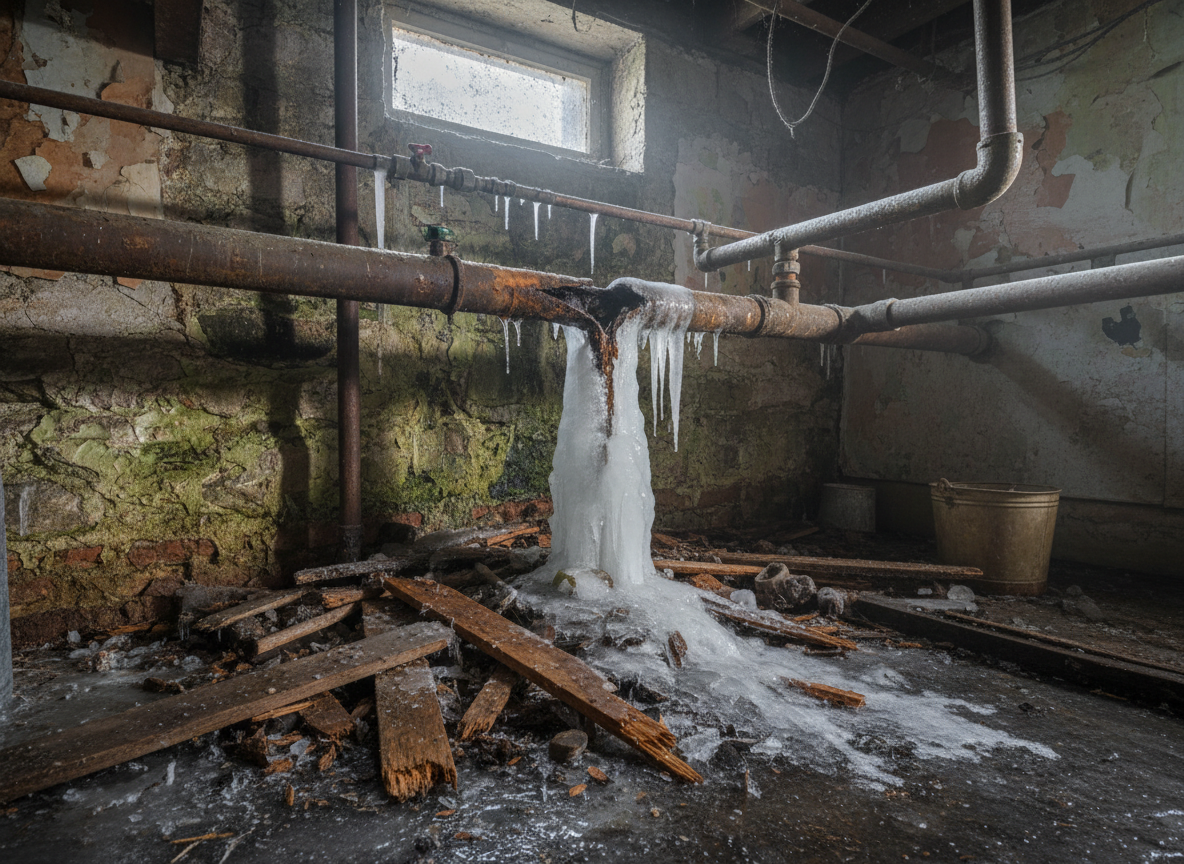
Wilmington winters cause pipes in pre-1950 homes to freeze and burst most often when overnight lows drop to 15–25°F for two or more consecutive nights, especially in neighborhoods such as Downtown Wilmington, the East Side, and Brandywine where many row houses and early 20th-century buildings have uninsulated basements and crawl spaces.
Older Pipe Materials and Wilmington Housing Stock
Pre-1950 homes in New Castle County commonly contain galvanized steel or cast-iron supply lines that corrode from within over decades. These materials lose flexibility in cold weather, so even moderate expansion from ice can split joints or create pinhole leaks. Homes in Forty Acres and Highland often retain original plumbing routed along exterior walls or under first floors with minimal insulation. Once ice forms inside a ½-inch galvanized line, pressure can reach levels that crack fittings within hours of sustained sub-freezing temperatures. The humid subtropical climate brings rapid thaws after cold snaps, sending sudden water flow through already compromised sections and creating larger interior leaks.
How Local Terrain and Weather Patterns Increase Risk
Brandywine Park and the Delaware Riverfront sit at lower elevations where cold air pools, keeping ground temperatures lower longer than upland blocks in Trolley Square. Pre-1950 basements in Southbridge and Browntown frequently sit at or below the water table, so any burst feeds directly into standing water that migrates into joists and plaster. Cold winters here typically feature 25–35 nights below 32°F between December and February, with occasional stretches reaching single digits. These conditions turn small attic or exterior spigot leaks into ceiling damage within one freeze-thaw cycle. The same weather patterns that affect Newark and Claymont produce identical pipe stress in Wilmington's older stock.
Typical Damage Locations Inside Pre-1950 Structures
Pipes most at risk run along north-facing walls, through unheated laundry rooms, and under kitchen sinks in homes built before 1950. In the West Side and East Side, many kitchens sit above crawl spaces that receive little heat, allowing supply lines to reach freezing within four to six hours once outdoor temperatures fall below 20°F. Bathroom risers in multi-story row houses often share exterior chases with minimal protection. When these lines fail, water travels along lath-and-plaster walls and into finished basements common throughout New Castle County. Water extraction becomes necessary once water reaches finished surfaces.
Early Indicators and Seasonal Timing
Homeowners notice reduced flow from faucets or strange knocking sounds first, usually after the second or third hard freeze of the season. Discolored water or damp spots along baseboards appear within 12–24 hours of a thaw. In neighborhoods near the Grand Opera House and Rodney Square, where many homes share party walls, one unit's burst can affect adjacent properties through shared plumbing chases. The period from mid-January to early March accounts for the majority of these calls because accumulated ice and repeated expansion cycles finally exceed pipe strength.
Practical Steps That Reduce Winter Pipe Failures
Shut off and drain exterior hose bibs before the first hard freeze, then open interior valves slightly to maintain a trickle on the coldest nights. Adding foam insulation sleeves to exposed runs in basements of pre-1950 homes cuts freeze risk by several degrees. Checking attic and crawl-space pipes before December helps identify sections already thinned by corrosion. When a burst does occur, prompt structural drying limits secondary damage to flooring and framing. For cost context on water removal after such events, see typical costs for removing standing water in Wilmington Delaware.